
Brush Clearing
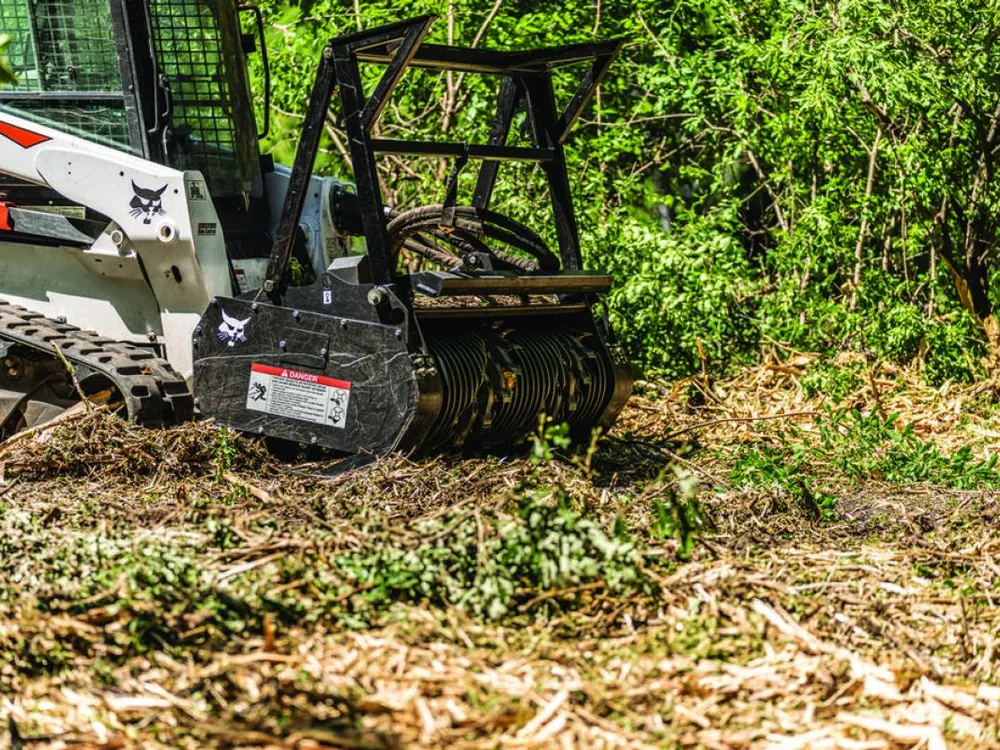
We clear cedar, mesquite, vines and saplings off pasture, acreage, creek edges and home sites. The mulcher grinds the brush in place, and the mulch stays on the ground.
Learn More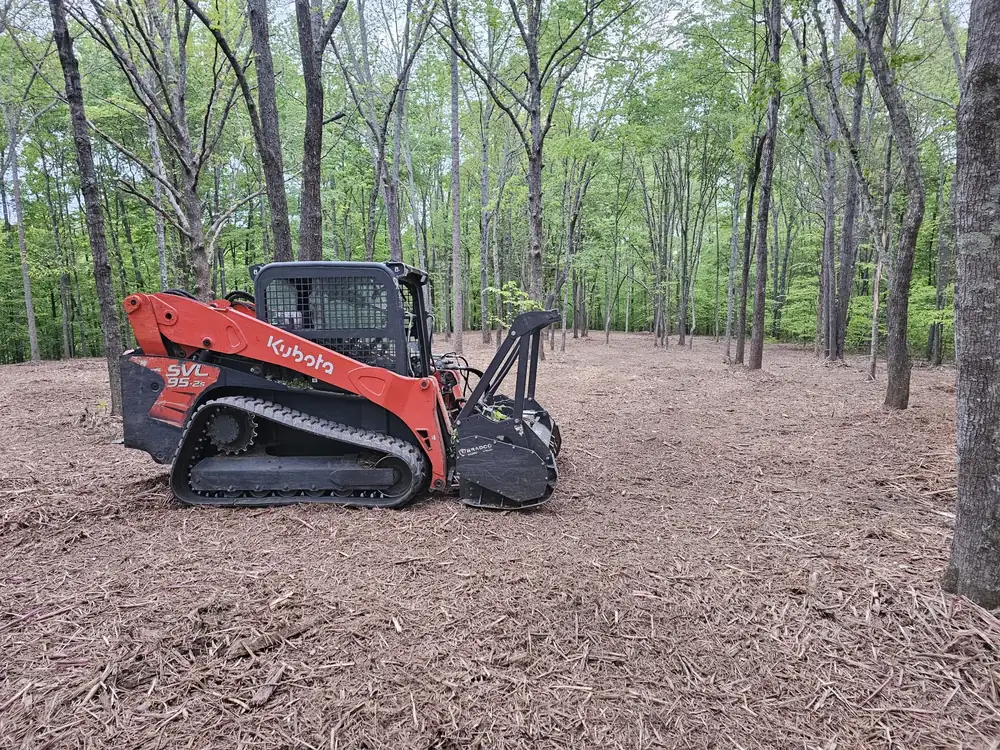
Forestry mulching clears brush and small trees by grinding them into mulch where they stand. It is the main service at Clear Choice and the way we handle most land clearing around Hillsboro. We run a skid steer with a forestry mulching head. The mulch stays on the ground as a cover for the soil.
Mulching suits a pasture grown up in brush, or a wooded edge that has turned into a thicket. Here, that growth is often mesquite or Ashe juniper, which locals call cedar. Mulching takes it down and opens the land back up. Call or text (817) 937-1506, and we look at the job and put the quote in writing.
Tell us what needs clearing and where it is. We look at the job and put the quote in writing.
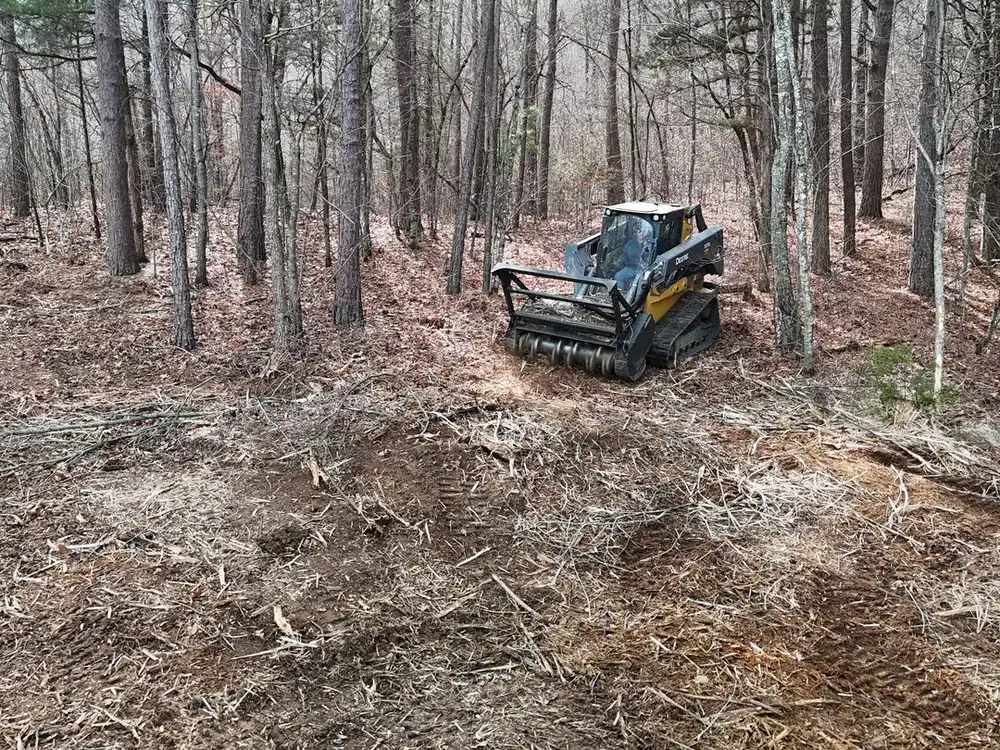
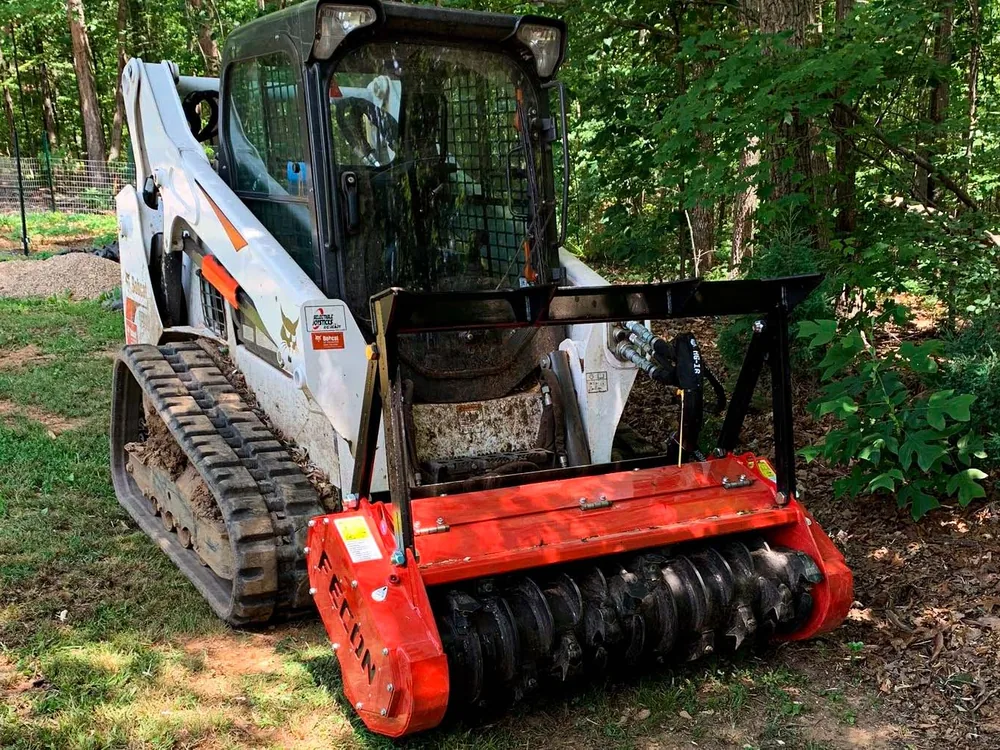
The mulching head mounts on the front of a skid steer. Its spinning teeth chew standing brush and small trees into chips and shreds. Cutting and mulching happen in the same pass, and the material lands on the ground.
Most mulching happens at ground level, the Forest Service's equipment guide notes. Stems get cut down low, and the roots stay in the soil. The same guide says mulch on the ground can hold runoff better and breaks down into the soil.
The mulcher handles brush, saplings, thickets and small trees. It also opens trails and access paths through heavy growth. For pasture where regrowth keeps taking over, see our brush clearing on overgrown pasture.
Hill County ground changes from east to west. Federal soil survey data shows deep black clay as the most common soil in the county. Toward Lake Whitney, thin and gravelly soil sits over limestone.
Dry black clay cracks and takes in water fast, NRCS notes. Once wet, it takes in water very slowly and turns sticky. On the limestone, rock wears down mulcher teeth faster.
Hillsboro sits at the center of our service area along I-35, from Waco to the south Dallas Fort Worth suburbs. Both kinds of ground shape how a job runs, so we look at the land before we write the quote.
A dozer clears land by pushing brush and trees over and raking them into rows called windrows. Texas forestry best management practices tell crews to keep the soil pushed into a windrow to a minimum. Those piles are often burned, and a drought can stop that. Texas law lets the county commissioners court ban outdoor burning outside city limits, for up to 90 days per order.
Forestry mulching turns the brush into ground cover instead of a burn pile. Texas Parks and Wildlife prefers brush control that disturbs little soil and lets you choose what stays. Its North Central Texas guidance says that helps prevent soil erosion. The state forest service also lists the forestry mulcher as a tool for clearing flammable brush near homes.
Mulched ground still holds roots and stump bases, so it is not a finished building pad. A house or barn site needs the builder's dirt work after the clearing. See lot clearing for building sites for how a cleared lot looks to the builder.
Call or text for a written quote. We work about 50 miles around Hillsboro across Hill, McLennan, Ellis, Johnson, Navarro, Bosque and Limestone Counties.
(817) 937-1506From the first call or text to the finished work, here is how it goes.
Call or text (817) 937-1506, or send the form. Tell us where the land is and what has grown up on it.
We come out to see the job in person. The brush, the tree sizes, the ground and the way in all shape the plan.
The quote comes in writing and spells out the work. You decide with it in hand.
We set a start date with you and bring in the mulcher. Brush and small trees go down and turn to mulch right there.
The land is open, and the mulch lies where it fell. If the job includes stump grinding, the stumps get ground down to grade or just below it.
Common questions about forestry mulching around Hillsboro and the surrounding counties. If yours is not here, call or text and ask.
We clear cedar, mesquite, vines and saplings off pasture, acreage, creek edges and home sites. The mulcher grinds the brush in place, and the mulch stays on the ground.
Learn More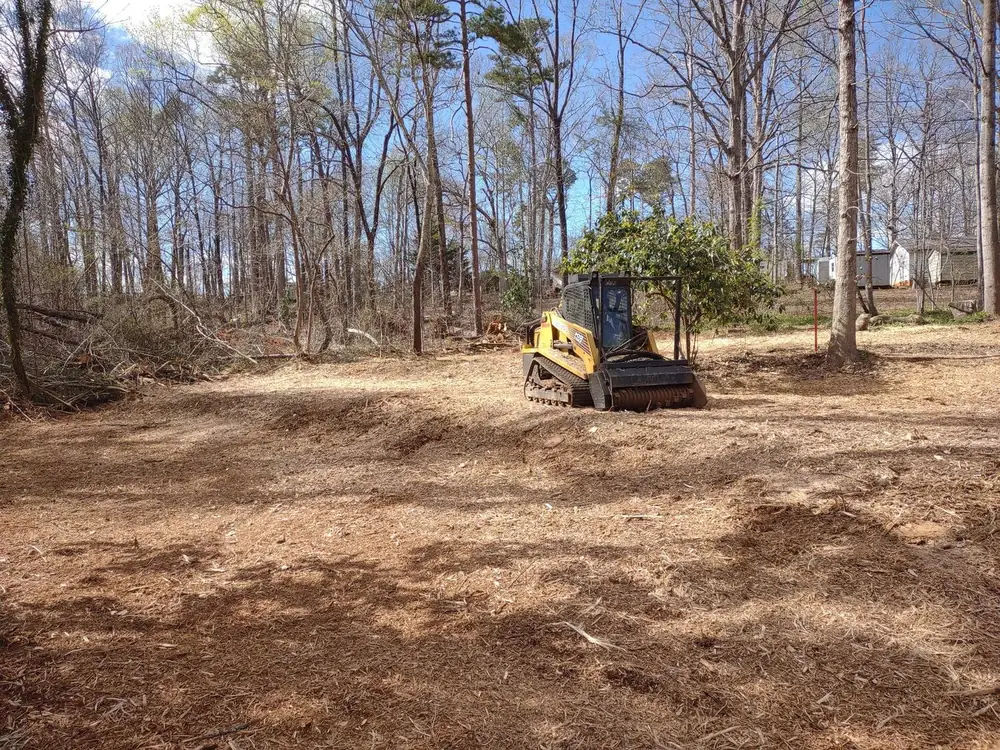
We clear building lots and overgrown lots of brush and small trees. A skid steer with a forestry mulching head turns the growth into mulch that stays on the ground.
Learn More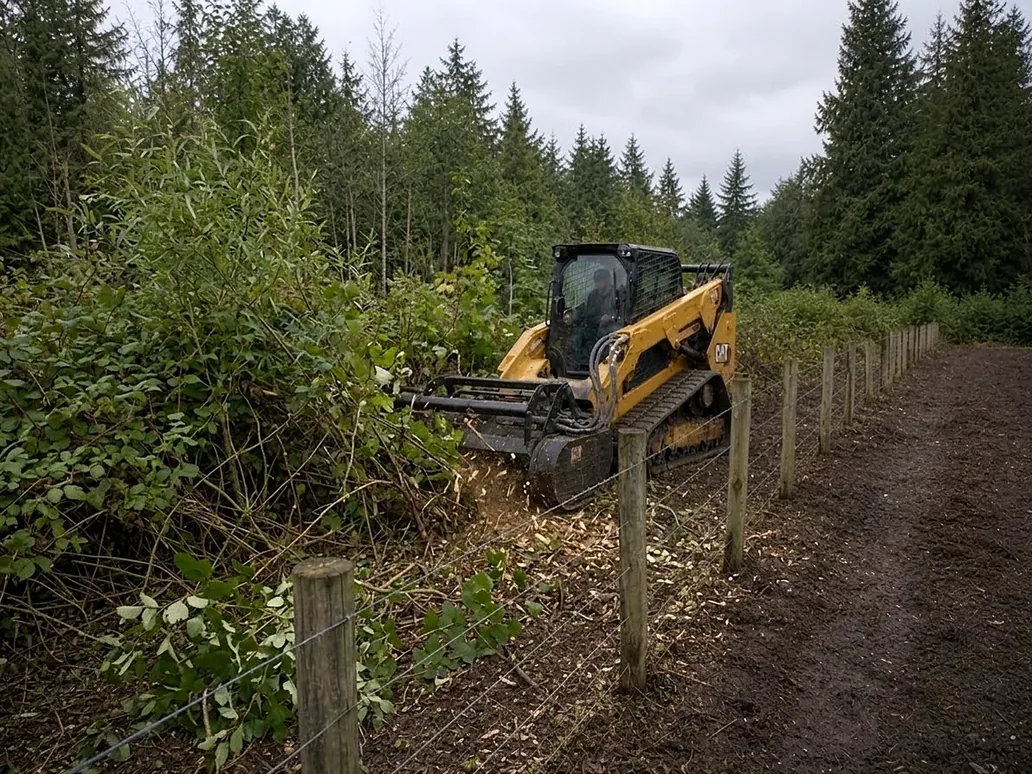
We mulch the cedar and brush that grow up along fence lines and property lines. You get an open strip along the wire, ready for repairs or a new fence.
Learn MoreThe brush turns to mulch on the spot, so the clearing and the cleanup happen together. What is left is open ground under a layer of mulch.
We look at the job before we price it, then put the quote in writing. You see what the work covers before you decide.
We clear the brush and small trees, and we can grind the stumps left behind. One company takes the land from overgrown to open ground.
Our service area follows the roads that meet at Hillsboro. I-35 runs north and south through it, and TX-22 runs west to Whitney and east to Corsicana.

What forestry mulching costs per acre in Texas, from national cost guides and the state's custom rates survey. See what moves the price of an acre.
Read more →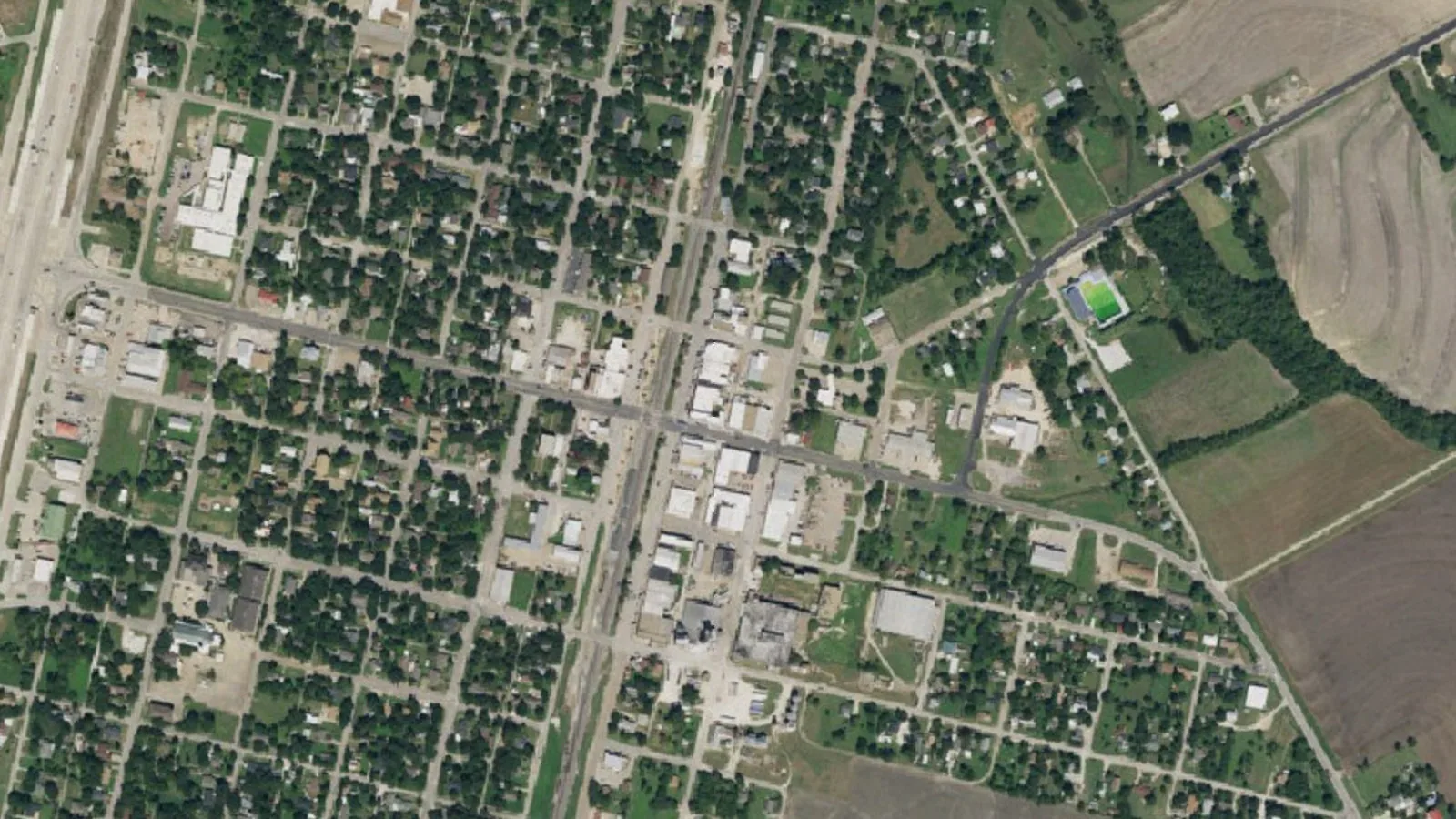
Cedar dies when cut low, but mesquite sprouts back. Why both take over Central Texas pasture, how to clear each one and how to keep cleared land open.
Read more →
Land clearing cost per acre in Texas by method, from national cost guides and the 2026 extension survey. Plus the rules to check before you clear.
Read more →
What stump grinding costs in Texas per stump and per inch, from national cost guides, plus what moves the price and grinding versus pulling a stump.
Read more →Tell us the town and what has grown up on the land, and we will look at the job. You can also call or text (817) 937-1506.
Tell us what needs clearing and where it is. We look at the job and put the quote in writing.