
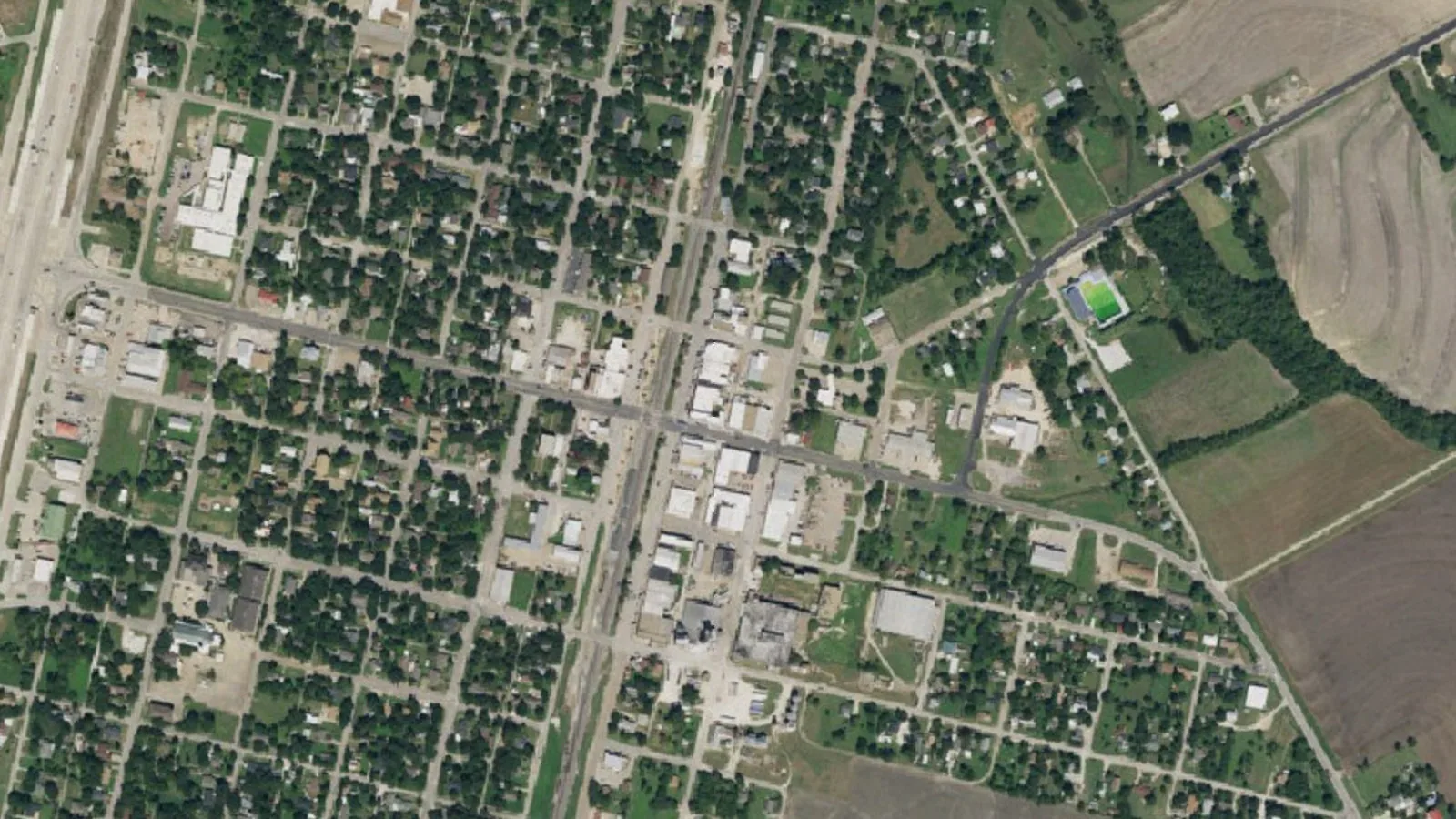
How Do You Clear Cedar and Mesquite in Central Texas?
Ashe juniper, the tree locals call cedar, dies when it is cut off at or just above the ground. Mesquite is tougher. Cut it off and it sprouts back from buds below the soil. So the first clearing opens the land, and a follow-up pass a few years later keeps it open.
Our brush clearing around Hillsboro mulches both in place with a skid steer and a forestry mulching head. The mulch stays on the ground as cover, and the roots stay in the soil.
Why do cedar and mesquite take over Central Texas pasture?
Fire once kept them in check. Extension research says intense fire kept junipers out of Texas grasslands before settlement. Fewer fires and heavy grazing let cedar move in, and drought can add to it.
Animals spread the seed. Birds and mammals carry cedar seed the farthest, extension research says. Cattle eat mesquite pods and pass the seed in their manure, often far from the parent tree.
The Handbook of Texas places Hill County in the Blackland Prairie, Grand Prairie and Eastern Cross Timbers regions. On Heiden clay, a common county soil, improper grazing trades tall grass for weeds and woody plants, NRCS says. On the chalky Eddy soils, NRCS notes juniper is common in many places.
Texas NRCS calls brush a serious concern above 10 percent canopy cover or 50 plants an acre. To count yours the NRCS way, carry a 10-foot pole crosswise along a 436-foot line. Count the brush rooted under it, and multiply by ten for plants per acre.
What do cedar and mesquite do to grass and water?
They take the grass first. Extension research says dense cedar cuts forage production hard and makes livestock harder to work. Mesquite thickets hold grass back too, though how much grass returns after clearing varies.
Then they take the rain. On the Edwards Plateau, range scientists found only about 20 percent of yearly rain reaches the soil under Ashe juniper. The same research ties rising cedar cover to seeps and springs that stop flowing.
Mesquite drinks its share too. In North Texas studies, a grown mesquite used up to 20 gallons of water a day in ideal conditions. Water gains in creeks and springs after clearing vary by site.
Why do fence rows fill up with cedar?
Birds that eat cedar berries like to sit on fence wire, and the seeds drop below. Botanists at Baylor University call it a very common way junipers spread. It accounts for miles of fence row junipers in grassland that has no other junipers, they write.
A fence row full of cedar hides broken wire and leaning posts. Female cedars in the row bear berries of their own, and birds spread that seed into the pasture. Our fence line clearing mulches a strip along the wire so the fence can be seen and repaired.
Which clearing method works on cedar, and which on mesquite?
Cedar does not sprout from its base when the top is killed, extension research says. Mesquite has a bud zone below ground that sends up new stems when the top is cut.
| Method | Who does it | Cedar (Ashe juniper) | Mesquite |
|---|---|---|---|
| Forestry mulching | Clear Choice | Dies when cut at or near the ground | Top dies, then it resprouts |
| Dozer grubbing or root plow | A dozer contractor | Dies when pushed out or cut low | Dies when cut below the bud zone |
| Hand cutting | Often the landowner | Dies when cut at or near the ground | Sprouts back from the base |
| Spraying | Another trade, or the landowner | Leaf and soil sprays work best under 3 feet | Leaf or stem spray on each plant |
| Prescribed fire | The landowner’s own choice | Dies under 4 feet tall with enough dry grass | Top dies, then it resprouts |
Forestry mulching grinds the brush where it stands. Mesquite comes back as a cluster of sprouts. Repeated top cutting can turn a stand into a many-stemmed thicket, range scientists found. The mulcher handles brush, saplings and small trees, and a tree service takes down the big ones.
Dozer work is a separate trade. Grubbing kills mesquite by cutting the taproot below the bud zone, 6 to 14 inches down by tree size. A root plow also tears out most of the grass, so the ground often needs reseeding. Texas NRCS plans root plowing only where a stand of grass can be readily established.
Hand cutting works on cedar of any size when the cut is at or just above the ground. Big stands of mature cedar usually call for heavy equipment, the Brush Busters guide notes.
Spraying is another trade, or the landowner’s own choice. The extension service’s Brush Busters guides lay out leaf and stem sprays for mesquite. Texas NRCS says to get herbicide advice from extension staff or the state forest service, and to follow the label.
Prescribed fire is the landowner’s own choice too. Extension research says fire can kill cedar under 4 feet tall when enough dry grass carries it. It rarely works in thick, mature cedar, where little grass is left to burn. Fire runs under the state’s outdoor burning rules and any county burn ban.
What grows back, and when do you go back?
New cedar comes only from seed. Mesquite comes back from seed and from the buds below ground. Texas NRCS says no single treatment solves a brush problem, so its plans build in follow-up. It schedules mesquite follow-up at about 3 to 4 feet of regrowth, often 2 to 3 years after clearing. Cedar seedlings get theirs at about 20 inches, often 3 to 5 years out.
Extension research says seedlings and saplings are much easier and less expensive to kill than mature cedar. So the time to go back is while the regrowth is small.
How do you keep cleared land open?
Keep the grass thick. Extension research says good grazing management cuts down the bare spots where cedar seedlings take root. Where livestock are on the place, Texas NRCS pairs brush work with a grazing plan.
Look the place over regularly. The Brush Busters guides call cedar and mesquite control an ongoing job, and they urge treating young plants early. A light mulcher pass takes out cedar seedlings and knocks mesquite sprouts back. Killing mesquite takes grubbing, or a spray by another trade or the owner.
Leave some brush on purpose if you want wildlife. Extension research ranks shelter among cedar’s most important uses for wildlife. Mesquite gives cover to deer, turkey and quail.
Tall, old cedar mixed with oak in a canyon is a special case. Texas Parks and Wildlife says the endangered golden-cheeked warbler nests only in that kind of Central Texas woodland. The birds nest at Meridian State Park from March to July, the agency notes. Its guidelines say small cedar invading open pasture is not warbler habitat. Near real habitat, they put cedar removal in September through February.
Mind the oaks you keep, too. The state forest service says land and cedar clearing can wound oaks and let oak wilt in. It says to avoid wounding oaks from February through June and to paint any oak wound right away.
Ready to open up your cedar and mesquite?
Clear Choice serves Hillsboro, Hill County and the I-35 corridor between Waco and the south Dallas Fort Worth suburbs. Our cedar and mesquite clearing mulches brush and small trees in place, and we can come back for the regrowth. For market numbers, see what forestry mulching costs per acre. Call or text (817) 937-1506, and we look at the job and put the quote in writing.