
Forestry Mulching
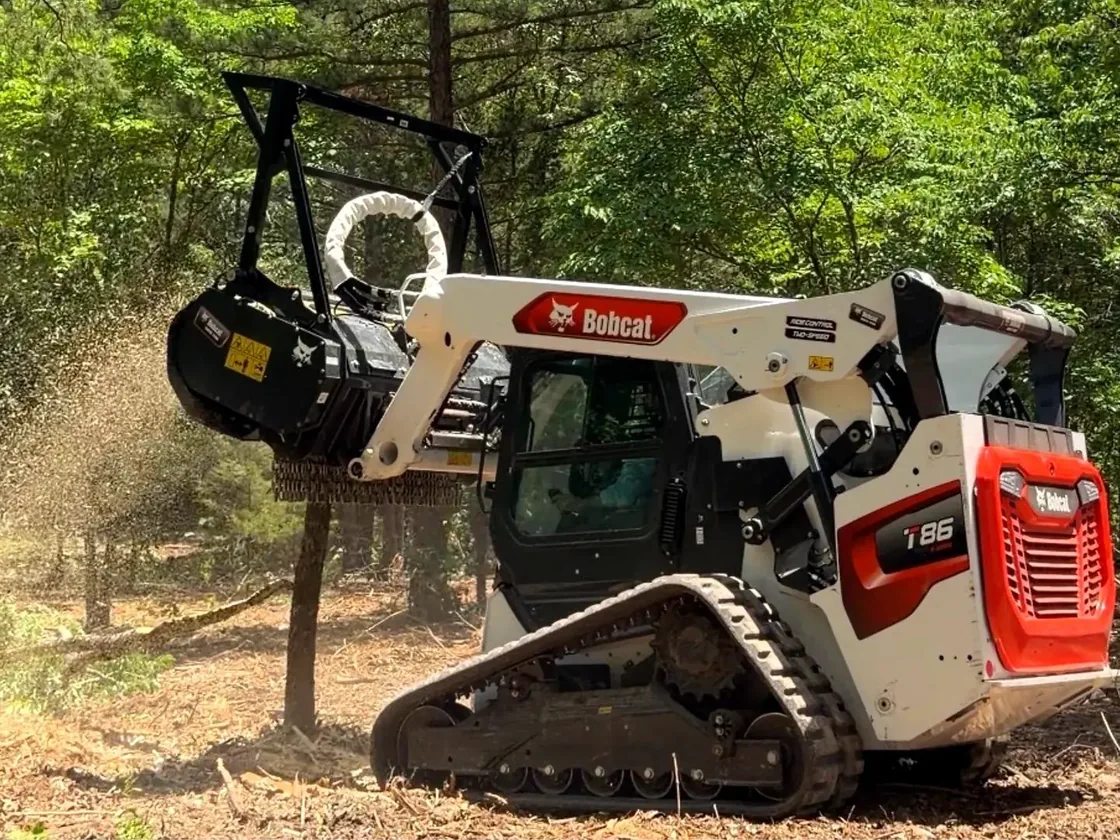
We grind brush and small trees into mulch where they stand. A skid steer with a forestry mulching head does the work, and the mulch stays on the ground.
Learn More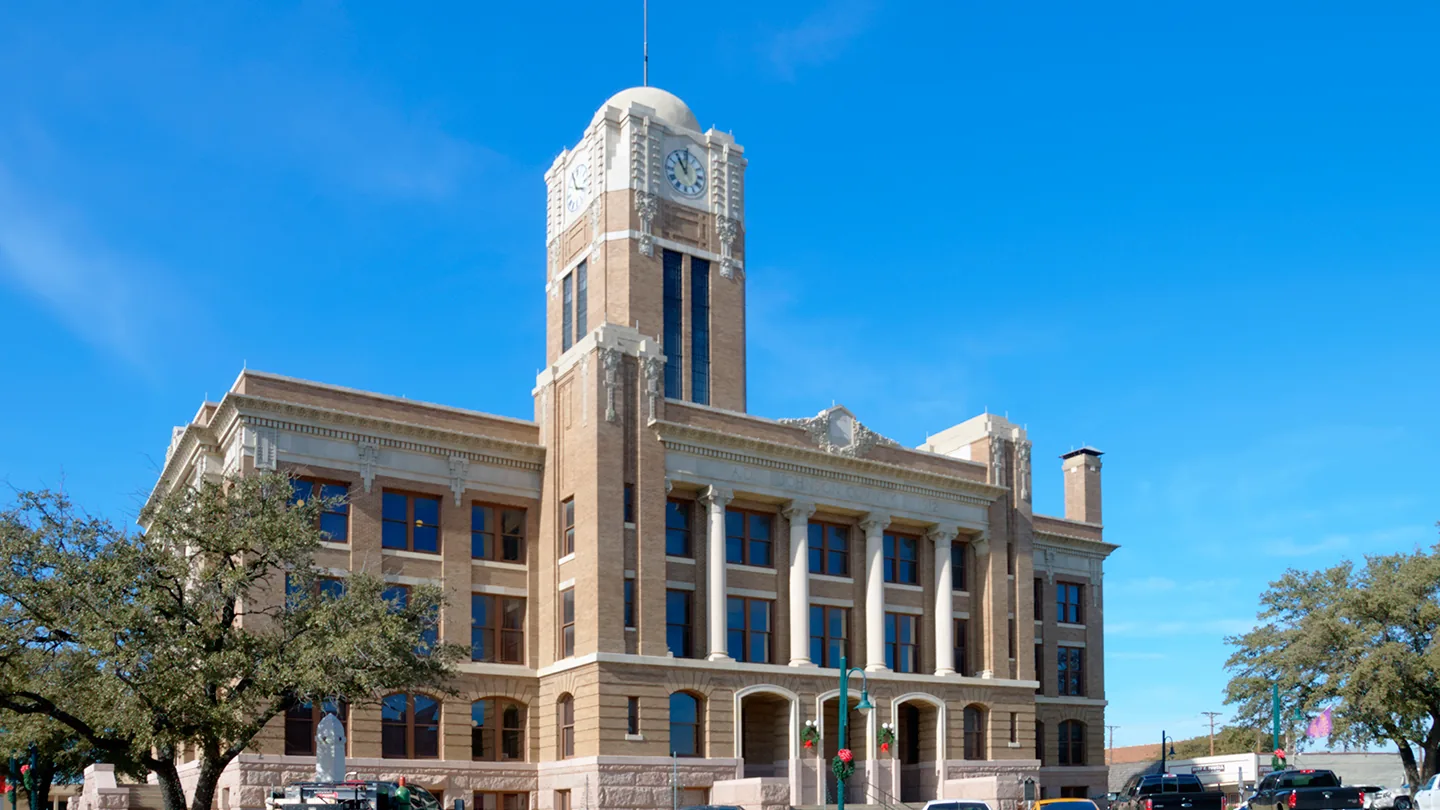
Land clearing in Cleburne usually means mesquite and Ashe juniper, the tree most people here call cedar. Johnson County's own history notes both in the grass on the county's Grand Prairie side. Cedar moves in wherever birds drop seed. On small acreage around town, that brush fills in pasture and grows up along fence rows.
Clear Choice clears land with the mulcher, a skid steer with a forestry mulching head. Cleburne is part of our service area, about 30 miles northwest of Hillsboro by TX-171. Around Cleburne, we offer brush clearing for pasture and acreage, plus work on overgrown lots. Call or text (817) 937-1506, and we look at the job and put the quote in writing.
Tell us what needs clearing and where it is. We look at the job and put the quote in writing.
Cleburne sits on the line between two kinds of country. The EPA's ecoregion map puts the city in the Eastern Cross Timbers, which the county calls a post oak savannah. Cleburne State Park to the southwest and Godley to the northwest fall in the Grand Prairie instead. The county describes that side as alkaline loam over limestone.
Post oaks grow into big trees, and a tree service is the call for those. We clear the undergrowth around them, like cedar, mesquite, hackberry and elm saplings. Forestry mulching with a skid steer turns that growth into a layer of mulch where it stands.
NRCS guides for these soils say juniper first shows up under fences and trees, where songbirds rest. That is why fence rows here often fill with cedar first. Fence line clearing opens a strip along the wire so the fence can be seen and reached.
The NRCS soil survey for Johnson County maps large parts of Cleburne as Lindale clay loam and Sanger clay. Sanger is a heavy clay that turns sticky when wet. When it dries, it cracks, and water runs into the cracks fast. Once it is wet, water soaks in very slowly, and a heavy machine on soaked clay leaves ruts.
On the slopes, Aledo soils are gravelly clay loam over limestone, with bedrock about 16 inches down. Rock that close to the surface is worth knowing about before any stump grinding. Cleburne averages about 38 inches of rain a year, per NOAA's 1991 to 2020 normals. May and October are the wettest months.
Lake Pat Cleburne sits on the Nolan River at the south edge of town, and Buffalo Creek runs through Cleburne. Inside the city, a Floodplain Development Permit is required to build in the 100-year floodplain. Outside the city, Johnson County's 2019 flood order counts fences in the floodplain as development. Ask Johnson County Development Services before a fence or a building pad goes in near a creek.
The 2020 Census counted 31,352 people in Cleburne, and the Census Bureau's July 2025 estimate puts the city near 40,000. The Bureau's five-year survey counts about 12,500 homes, and about 7 in 10 are detached single-family houses. Close to half of those homes went up before 1980.
In town, an overgrown lot is also a code question. Cleburne adopted the 2021 International Property Maintenance Code in April 2023, and it covers high grass and weeds. The city's Code Compliance division enforces those rules. Lot clearing with the mulcher opens a lot like that back up.
The Chisholm Trail Parkway, SH 121, ends at US-67 in Cleburne. One recent city zoning case asked to rezone about 63 acres near the parkway from Agricultural to Industrial. Across Johnson County, land in farms fell about 30 percent from 2017 to 2022 in the USDA farm census. Pasture is still the biggest use of that land, and most farms run under 50 acres.
Communities and areas we serve around Cleburne: Downtown Cleburne, Nolan River Road, Westhill Drive, Buffalo Creek, Cleburne Station, Chisholm Trail Parkway, Lake Pat Cleburne, Cleburne State Park, Keene, Joshua, Godley, Rio Vista.
Cleburne ZIP codes served: 76031, 76033.
Cleburne is part of our service area. We look at the land first, then put the quote in writing.
(817) 937-1506 We grind brush and small trees into mulch where they stand. A skid steer with a forestry mulching head does the work, and the mulch stays on the ground.
Learn More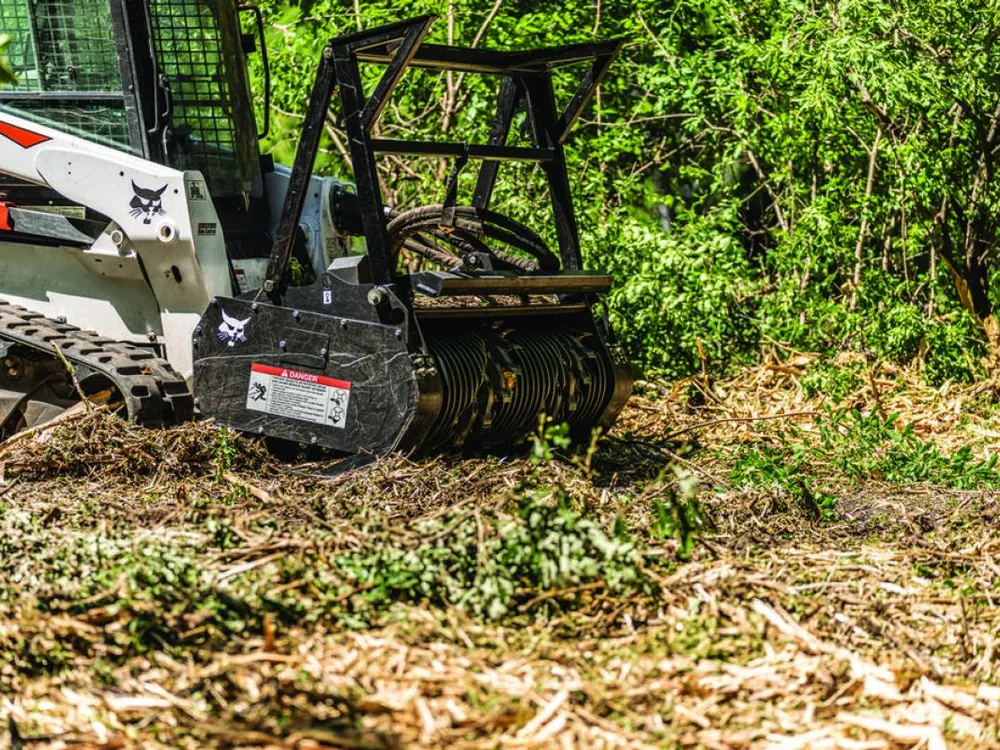
We clear cedar, mesquite, vines and saplings off pasture, acreage, creek edges and home sites. The mulcher grinds the brush in place, and the mulch stays on the ground.
Learn More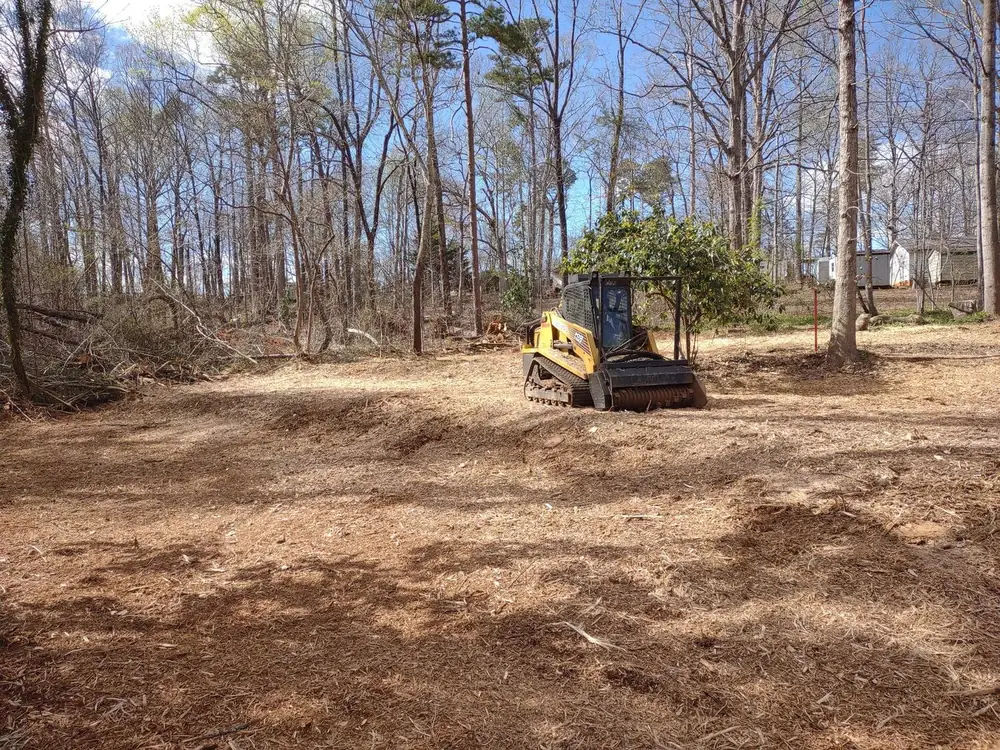
We clear building lots and overgrown lots of brush and small trees. A skid steer with a forestry mulching head turns the growth into mulch that stays on the ground.
Learn More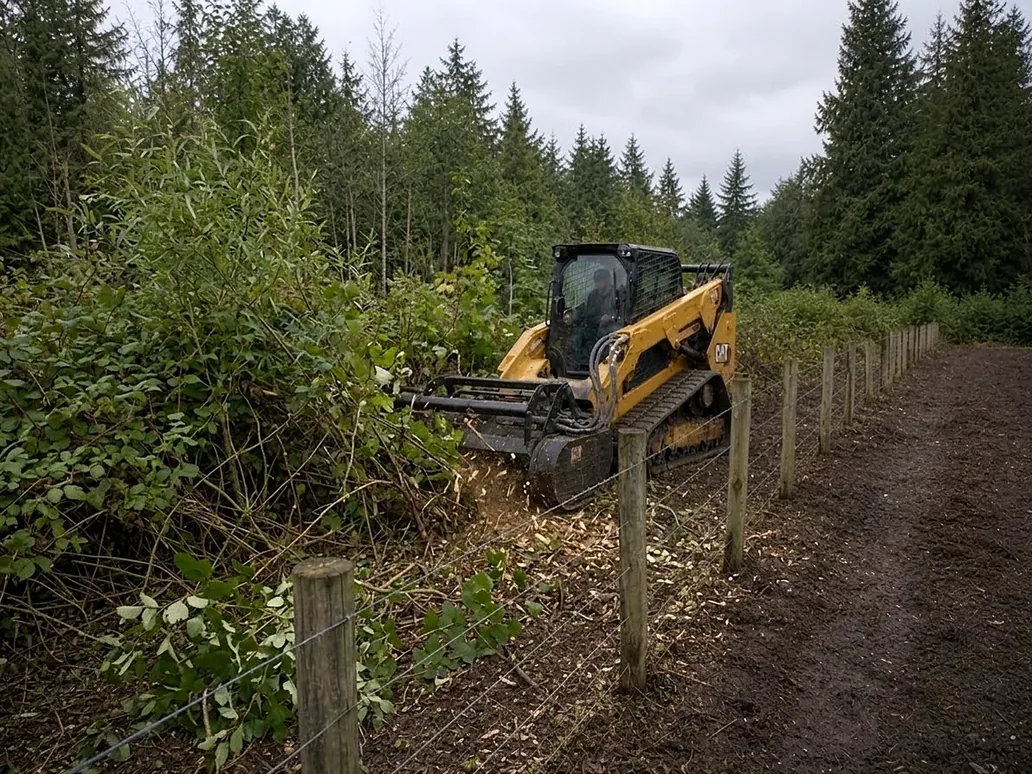
We mulch the cedar and brush that grow up along fence lines and property lines. You get an open strip along the wire, ready for repairs or a new fence.
Learn More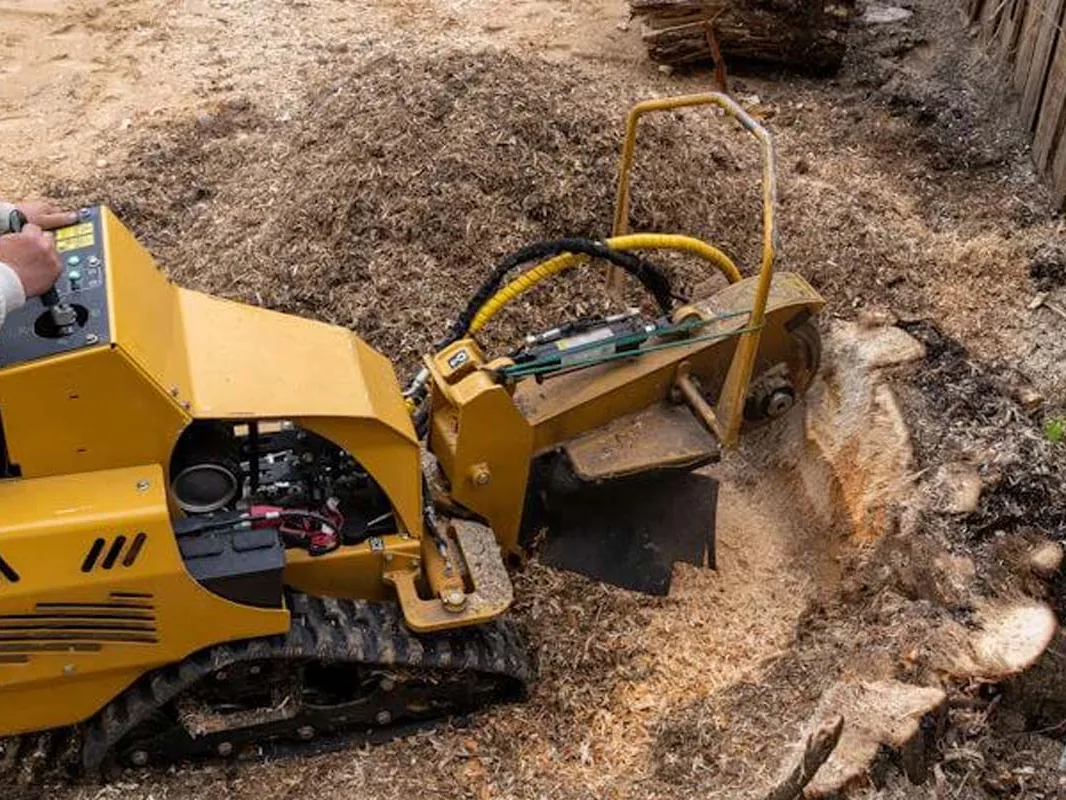
We grind stumps to grade or just below it, so you can mow over the spot or build on it. The grindings stay on site for you to use.
Learn MoreA few of the questions we hear most around Cleburne. If yours is not here, call or text and ask.
Tell us the town and what has grown up on the land, and we will look at the job. You can also call or text (817) 937-1506.
Tell us what needs clearing and where it is. We look at the job and put the quote in writing.